The “Trojan Horse” of the Fragrance World: In-depth Analysis of the Essential Differences Between pheromone perfume and Ordinary Fragrances

Having been in the perfume industry for so many years, I’ve seen countless people treat perfume as an invisible garment: applying it is like putting on a glamorous outer robe, pleasing themselves and others. But when someone quietly whispers “that thing” outside my consultation room—I know their purpose has changed. They’re no longer after “smelling good” but seeking a more direct influence: pheromone perfume.
There are many stories about pheromone perfume on the market, including myths and marketing noise. This time, I don’t intend to pile on definitions, but rather to explain the details of the laboratory and formulation table: two liquids, both of which seem to smell good but are fundamentally different—one exists for “smelling,” while the other attempts to “attack” the subconscious.
First, it is not another kind of “fragrance.”
Many people ask me, “What does pheromone perfume actually smell like?”
To be honest, the purest pheromone perfume might not smell “pleasant.” It might smell like sweat, have a touch of musky wildness, or even a hint of metal; sometimes you can’t even smell a distinct fragrance note.
This is precisely the difference. Regular perfume is an art of smell, relying on top, middle, and base notes to please the skin, making the conscious mind identify it as “rose/sandalwood.” Pheromones, on the other hand, don’t seek “recognition.” They attempt to bypass reason and communicate directly with the limbic system—the part that governs instincts, emotions, and sexual impulses.
Simply put: regular perfume speaks to your conscious mind, while pheromones whisper to your subconscious.
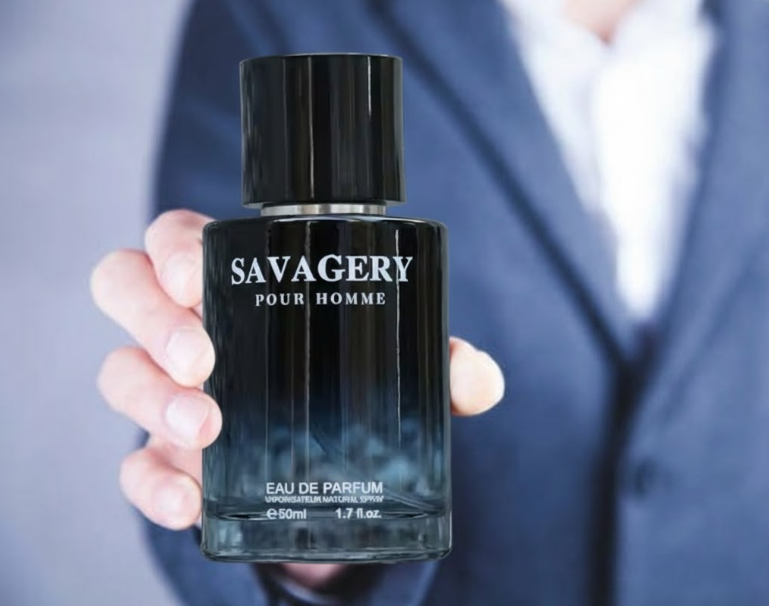
II. Ingredients and Carriers: Two Different Perfume Logics
Making traditional perfumes is like painting. You have to pursue layers, balance, and a lingering finish; essential oils, absolutes, and aromatic chemicals together form that “olfactory pyramid.” But making high-quality pheromone perfumes is more like working on the “hacker” side: it’s not just about the scent but also about the carrier, stability, and release rhythm.
Truly professional pheromone perfumes stably suspend synthetic pheromone molecules (such as chemicals that mimic human volatiles) in a suitable carrier, ensuring they are released at a predetermined rate when triggered by skin temperature. This is why you often find that high-quality pheromone perfumes have a plain, even simple, appearance when opened—that’s a deliberate understatement, designed to prevent the fragrance from masking the signal.
If the pheromone perfume you buy smells so strong, like it’s from the top floor of a department store, it usually means two things: the active ingredients have been diluted to the point of ineffectiveness, or they’ve been completely masked by a strong fragrance. In other words, the more the scent resembles “ordinary perfume,” the more likely the true value of the pheromone perfume has been sacrificed.
III. Are pheromone perfumes really effective?
This is what everyone wants to know most. Any advertisement claiming to “make them go crazy with just one spray” is basically selling a myth. In my observation, pheromone perfume is neither magic nor a magic key.
But one thing is very true: high-quality pheromones can lower certain psychological barriers in social interactions, acting as a “social lubricant.”
Empirical studies and long-term tracking have shown some subtle but stable changes:
When men use appropriate pheromones, people around them will linger their gaze a little longer, lean forward more frequently during interactions, and laughmore easily.
When women use related pheromones, men exhibit more gentle, patient, and protective behaviors.
These aren’t sudden formulas for love, but rather a kind of “inexplicable attraction”—a tendency that makes the other person more willing to get closer and linger in a fleeting moment. There is still debate in the scientific community (for example, whether the vomeronasal organ in humans has degenerated), but I tend to believe that even if the organ has degenerated, our primary olfactory system still retains sensitivity to certain ancient chemical signals.
If you’re looking for a subtle yet genuine social advantage, rather than a cinematic instant attraction, then a decent pheromone perfume is worth a try, but don’t get your hopes up too high.
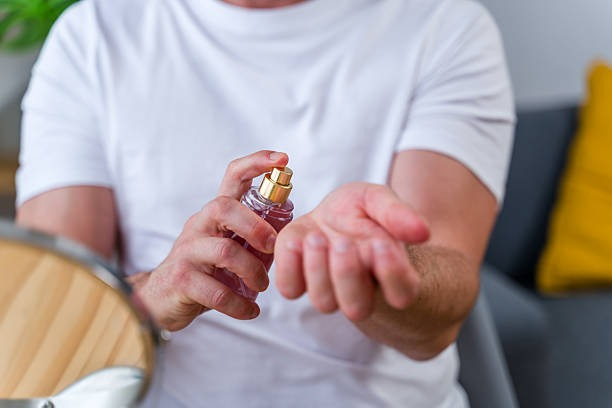
IV. Expert-level Selection and Usage Strategies
Now that we understand the essence, we will directly provide actionable suggestions to help you make decisions and use the technology according to the experts’ thinking.
1) Read ingredient tables like a chemist
Don’t just look at the packaging story. Be wary of products that only list “Parfum” or “Fragrance” on the ingredient list. Reputable professional products will usually list the specific pheromone name (such as Androstenone, Androstenol, Copulins, etc.) or at least clearly state the type and carrier of the active ingredient. Brands that cannot specify ingredients and concentrations are mostly selling concepts rather than actual effects.
2) Choose the right location and use body temperature to “activate” the signal.
Pheromones are lipid-soluble and require skin temperature to trigger diffusion. The surface of clothing is not a good site. Common and effective sites include:
Side of the neck (the side of the neck, not behind the ear)
Above the collarbone (near the chest, where the skin temperature is higher)
Inside of the wrist (to allow for natural exposure during interaction)
Applying pheromone perfume to these “heat-prone” areas is more likely to create subtle social effects than simply spraying it on clothes.
3) Don’t overdo it: Less is more.
Pheromones themselves are often not very strong, leading many to mistakenly believe that applying more sprays will be more effective. On the contrary, excessive application can sometimes veer from “attraction” into “harassment” or “aggression.” This is especially true for certain male pheromones, where overly concentrated application can cause discomfort. My experience suggests that low frequency and low dosage are safer—for example, applying 1-2 sprays a few times a week, adjusting according to product instructions and individual reactions.
V. The amplifying effect at the psychological level: Confidence is the key.
Finally, don’t overlook the simplest yet most important point: the greatest effect of pheromones may not be changing other people’s decisions but rather changing your own state. Spraying on a little pheromone perfume is itself a form of psychological suggestion—an invisible “armor.” When you stand straighter and have a more focused gaze, your nonverbal behavior simultaneously enhances your attractiveness. This inner confidence is often more powerful than any chemical signal.
Conclusion: Don’t be fooled by the “Trojan horse.”
Pheromonic perfume isn’t a magic bullet, but it’s not entirely useless either. Understanding its scientific basis, avoiding being overwhelmed by strong fragrances, and choosing the right carrier and application method, you can transform pheromone perfume into a reliable social tool, rather than an expensive source of noise. Remember: the product is secondary; the state of being is fundamental.
Want to learn more about our lab-tested pheromone perfume line designed to optimize social performance and how to use it? Click here to explore further:
[Buy Pheromone Perfume—Unleash Your Attraction & Confidence]