Why can fragrance awaken your deepest memories? The mysterious connection between smell, emotion and “scent memory”

—— From the Proust effect to pheromone perfume
Have you ever had that moment? A certain smell suddenly hits your nose, and the next second, you’re transported back to your childhood kitchen, the arms of a loved one, or a summer you thought you’d long forgotten? This phenomenon isn’t just a coincidence; it’s a psychological reaction proven by neuroscience: it has a name: the Proust Effect .
With the growing popularity of scent culture, many brands are beginning to focus on the subtle connection between aroma and emotion, even using “emotional induction” as a selling point in various pheromone perfumes , hoping to not only awaken memories but also influence feelings and attraction. So, does scent really have such magical power?
Why is the connection between smell and memory so strong?
Unlike vision and hearing, the neural pathways of smell go “directly to the emotional center of the brain.”
When you smell a scent, its information goes directly from the olfactory receptors to the brain’s limbic system , specifically two core areas: the hippocampus (responsible for memory) and the amygdala (responsible for emotion). This process skips logical analysis, and emotional reactions often outpace conscious judgment.
This explains why you can experience a sudden surge of emotion when you smell a certain aroma, even before you realize what it is. Smells “first trigger emotions, then evoke memories,” an instinctive mechanism in the brain.
How does scent become an “anchor of memory”?
first associate a scent with something , the memory is much stronger than with an image or sound. This “olfactory imprint” is commonly found in:
The perfume used at the wedding can still instantly evoke moments of happiness years later;
The scent of laundry from a childhood caregiver evokes a sense of security;
The scented shower gel you often use in the summer may remind you of the energetic state of your student days.
This phenomenon is also called context- dependent memory : when you are exposed to similar external cues (such as smells) again, it is easier to recall related memories.

Which scents are more likely to trigger emotions and memories?
While olfactory experiences are highly individual, some notes are more likely to trigger emotional memories due to their universality:
| Fragrance type | Common associations |
| Lavender | Sleep, maternal love, and childhood security |
| vanilla | Baking, home kitchen, festive atmosphere |
| Citrus | Morning freshness, summer travel, sunny mood |
| Sandalwood and Musk | Coming-of-age rites, romantic memories, and intimacy |
These scents are often found in classic perfumes and are also often used in so-called pheromones perfumes , hoping to create attraction on a subconscious level through aroma.
Does pheromone perfume really work?
This is a question many readers ask.
Pheromone perfumes are traditional fragrances infused with synthetic pheromones. These molecules originally act as chemical signals in humans and animals, influencing social behavior, attracting mates, and signaling emotional states.
Current research on pheromones’ actual effectiveness in interpersonal attraction remains controversial. Some experiments suggest that pheromones can slightly influence people’s first impressions of scent users (e.g., “more attractive” or “more relaxed”), but this effect often depends on factors such as the context, individual constitution, and psychological cues.
That is to say, it may not make you “more attractive” immediately, but in certain situations, it may indeed enhance liking and closeness.
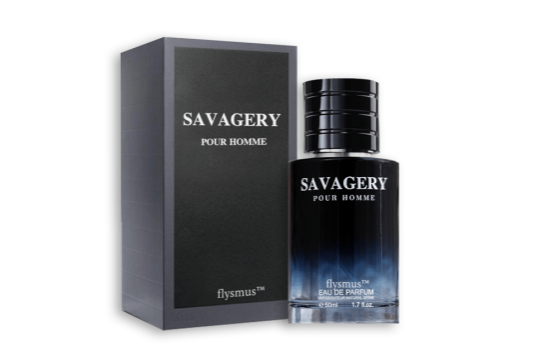
Fragrance is not only beautification, but also the “invisible language” of emotions
The reason why we have a strong preference for certain perfumes and smells is probably not because they smell “good”, but because they evoke certain memories, desires or emotional experiences deep in our hearts.
This also explains why perfume ads often appeal to emotions, memories, and intimacy rather than simply describing the scent. Fragrance is not a rational choice, but a projection of emotion.
Summary: Do you have a bottle of “emotional perfume” in your life?
The power of scent is far more profound than we imagine. The pathway from smell to memory and emotion is the brain’s oldest and most instinctive response channel.
pheromone perfume that accidentally evokes a memory , they are recording the trajectory of your life.
Think back, do you have that bottle of “emotional perfume” in your memory? If you are looking for your own fragrance language, why not start with your sense of smell and gradually rediscover your former self.
To learn more about the science and purchasing advice on fragrance, the psychology of smell, or pheromones, click here to delve into the secret world of scent. »